According to the Cheapskate Blog, it's your public library! Read all about it here, and then visit the library to pick up your weekend movies.
What's the Best Deal?
Thursday, July 30, 2009

Saturday, July 25, 2009
Review: Let the Great World Spin

McCann, Colum. Let the Great World Spin. (New York: Random House, 2009)
On the morning of August 7, 1974, Philippe Petit strung a wire between the new, not entirely occupied, twin towers of the World Trade Center in New York City. He proceeded to step out onto the wire, a quarter of a mile above the pavement, and walk across, eight times, for a period of 45 minutes, while office workers, commuters, and police looked on in wonder, admiration, and consternation.
Colum McCann tells the story of this aerial crime, enriching it with the stories of ten people who saw or were affected by the aerialist's action that day, including an Irish-born "street priest" in the South Bronx and his brother; Petit's sentencing judge, his wife, and son; mother/daughter hookers; and computer programmers on the West Coast. The reader is treated to a series of narratives that could stand alone as short stories, but that are, in the end, interconnected on the day of Philippe Petit's performance.
The novel introduces a stunning variety of social and historical issues that played out in the decade of the 1970's. The breakdown of social class is seen in the coming together of a group of mothers, mourning the loss of their sons in the Vietnam War, while celebrating their lives. The effects of poverty and drug addiction on women and children are illustrated by the "family business" of prostitution. The power of interlinked computers and telecommunications was in its infancy and creating excitement among the programmers who were thinking and dreaming big. The Vietnam War, moving towards its close in 1974, divided friends and family in New York City and elsewhere. The World Trade Center towers, newly constructed and occupied, represent a beginning in this novel, rather than the iconic destruction and terror we associate with them today.
Reading this novel, I was struck by the vast changes in communication between 1974 and the present. The Manhattanites on the sidewalk looking up at Petit paused in their busy lives to try to figure out what was happening 110 stories above them. They could not check CNN or their smart phones, as we would do today. They couldn't go online when they got to work to learn about what they'd seen. Computer programmers on the West Coast, who heard rumors of Petit's stunt, hacked into the phone system and began calling pay phones in New York City, hoping someone would pick up and tell them what was happening. In the era of the 24-hour news cycle and the Internet, it is hard to imagine how slowly, just 35 years ago, a sensational story could develop.
This book is extraordinary -- for its writing, for its depiction of 1970's New York, and for the way it captures the emotions of the lives being lived in its pages. Highly recommended.
Tuesday, June 30, 2009
Review: Await Your Reply
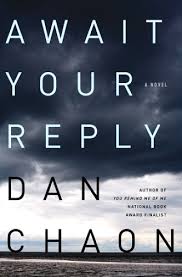
Await Your Reply, by Dan Chaon. (New York: Ballantine Books, 2009). Note: Scheduled publication date is September 2009. This review is based on an advanced reading copy.
The notion that we can be anybody we want to be takes on a new twist in this novel of aliases, identity theft, and fraud. Author Dan Chaon roams the permeable boundaries of self, as he demonstrates how easily his characters abandon old lives and assume new ones.
The main character of the novel is Hayden, variously described as a genius and a schizophrenic. We're never sure we meet him directly, though we come to know him through the reminiscences of his identical twin brother, Miles, and through the clues the author drops in the stories of the other characters in the book.
Miles, now 31 years old, has spent the last decade searching for his twin brother, who vanished at 21. He is unable to define his own life's path without knowing where his brother is. Hayden leaves clues to his ever-changing whereabouts in rambling late night phone calls and obscure letters, but Miles is always one step behind him.
Ryan, a college student who is about to flunk out of school, decides that his whole life has been a lie, when he hears some shocking family news. He disappears and begins a new life, on the wrong side of the law, with his uncle.
Lucy is a high school student whose parents died in her sophomore year. She takes to the road after graduation with her history teacher, who promises her a life of riches and excitement.
These stories, fascinating in themselves, are even more intriguing when the author pulls all the threads together. Chaon's character development is excellent, and he has an especially good feel for the young adults he creates. I highly recommend this novel. It's a great combination of literary fiction and a novel of suspense.
Friday, June 12, 2009
Midnight's Children
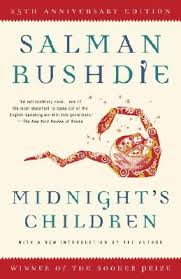
Midnight's Children, by Salman Rushdie. (Jonathan Cape, 1981)
Last year, Salman Rushdie's 27-year old novel, Midnight's Children, was honored as the all-time prize winning work of literature in the 40-year history of the Booker Prize.
The title refers to the babies who were born in the midnight hour on August 15, 1947, as India proclaimed its independence from Great Britain. The main character and narrator is Saleem Sinai, born on the stroke of midnight and destined to live a life that parallels the early struggles of the newly independent nation.
Saleem and the rest of Midnight's Children have unusual and extraordinary gifts and powers. Saleem's power is a telepathic one that enables him to communicate with the minds of others, and he uses his gift to virtually convene the Children who are spread throughout the geographic vastness of India.
Rushdie's writing is filled with history, magic, and humor. I'm currently two-thirds of the way through this book, and I am enjoying it immensely. I'm posting this information now, rather than waiting till I finish, so that I can share the news that Salman Rushdie is the next speaker in the Lackawanna County Library Lecture Series.
The lecture will take place on Friday, July 17, at 8 p.m., at the Scranton Cultural Center. As always, admission is free with a library card. Tickets are available at all Lackawanna County libraries, at the Scranton Cultural Center box office, or at the door the evening of the event.
Start reading Midnight's Children now, so you'll have time to savor and finish it before July 17!
Saturday, May 23, 2009
Choosing Books: A Potpourri of Recent Reads
What is it that makes us select the books we want to read? How do we choose, from all the hundreds of possibilities, the titles that draw us in? Here are a few books that I've read recently (and enjoyed), and the hooks that made me pick them.
I select ed The Goodbye Cousins, by Maggie Leffler, based on the recommendation of an author that I've already read and loved. Elinor Lipman commented, "I loved this book and loved its voice." Well, I love Elinor Lipman's voice, so if it's good enough for her, it's good enough for me.
I often shy away from memoirs, especially those written by people I've neve r heard of. What can make the life of a heretofore unknown individual interesting enough to read about? I'm Down, by Mishna Wolff, had this intriguing note on its cover: "Mishna grew up in a poor black neighborhood with her single father, a white man who truly believed he was black." Cover quotes attest to the book's humor, and the publisher compares the author to Augusten Burroughs in her ability to "make you laugh and move you at the same time."
Sometimes, a title is enough to put you off what might be an otherwise wonderful book. That was t he case with The Sweetness at the Bottom of the Pie, by Alan Bradley. It is, in my mind, an odd and unappealing title. However, writer Laurie R. King, one of my favorites, praises it lavishly on the cover, and the publisher seals the deal with the following comment: "Meet Flavia de Luce, an aspiring chemist with a passion for poison, a taste for homicide, an obsession with delving into the forbidden past of her taciturn, widowed father ... and did we mention she's eleven years old?"
One of the first books I blogged about was The Wednesday Sisters. Its author , Meg Waite Clayton, gives a warm recommendation to The Late, Lamented Molly Marx, by Sally Koslow. What really caught my eye, though, was the publisher's comment: "The circumstances of Molly Marx's death may be suspicious, but she hasn't lost her joie de vivre."
All four of these books are quick, fun reads, and all are recommended.
I select
 ed The Goodbye Cousins, by Maggie Leffler, based on the recommendation of an author that I've already read and loved. Elinor Lipman commented, "I loved this book and loved its voice." Well, I love Elinor Lipman's voice, so if it's good enough for her, it's good enough for me.
 I often shy away from memoirs, especially those written by people I've neve
 r heard of. What can make the life of a heretofore unknown individual interesting enough to read about? I'm Down, by Mishna Wolff, had this intriguing note on its cover: "Mishna grew up in a poor black neighborhood with her single father, a white man who truly believed he was black." Cover quotes attest to the book's humor, and the publisher compares the author to Augusten Burroughs in her ability to "make you laugh and move you at the same time."
Sometimes, a title is enough to put you off what might be an otherwise wonderful book. That was t
 he case with The Sweetness at the Bottom of the Pie, by Alan Bradley. It is, in my mind, an odd and unappealing title. However, writer Laurie R. King, one of my favorites, praises it lavishly on the cover, and the publisher seals the deal with the following comment: "Meet Flavia de Luce, an aspiring chemist with a passion for poison, a taste for homicide, an obsession with delving into the forbidden past of her taciturn, widowed father ... and did we mention she's eleven years old?"
One of the first books I blogged about was The Wednesday Sisters. Its author
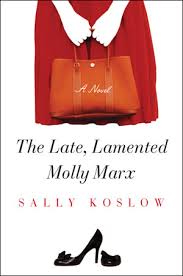 , Meg Waite Clayton, gives a warm recommendation to The Late, Lamented Molly Marx, by Sally Koslow. What really caught my eye, though, was the publisher's comment: "The circumstances of Molly Marx's death may be suspicious, but she hasn't lost her joie de vivre."
All four of these books are quick, fun reads, and all are recommended.
Friday, May 1, 2009
Review: Handle with Care

Handle with Care, by Jodi Picoult. (New York: Atria Books, 2009)
Willow O'Keefe is a smart, funny five-year-old with osteogenesis imperfecta (OI), or "brittle bone" disease. Her first fractures occur in utero, and the next breaks take place just after her birth. Handle with Care examines the extraordinary pressures on the family, especially on the mother, of a child who needs so much care.
Willow's mother, Charlotte, once a successful pastry chef, now cares for her young daughter full time. She becomes an effective, even aggressive, medical advocate for Willow during her frequent hospitalizations for broken bones. Her focus on Willow creates a distance between Charlotte and her policeman husband, Sean, and makes her adolescent daughter, Amelia, feel invisible.
Charlotte sets in motion a "wrongful birth" lawsuit, alleging that her obstetrician, who is also her best friend, did not give her the critical information she needed that would have given her the option to terminate her pregnancy. Charlotte believes that a substantial legal settlement is the only way for Willow to have a comfortable life, especially after her parents are gone.
Because of the lawsuit and the pressure it creates, Charlotte finds herself adrift and distant from all the people she loves -- her husband, her best friend, and her older daughter. Even her lawyer finds Charlotte's lawsuit distasteful. Nonetheless, Charlotte pushes on, firm in her belief that her choice is the only right one.
This book is brimful of issues. In addition to a child with OI and a wrongful birth lawsuit, Picoult throws in divorce, bulimia, cutting, shoplifting, Catholic pro-life beliefs, medical malpractice, and an adult adoptee searching for her birth mother. While there are enough themes going on here to supply several books, they don't really get in the way of getting this story told. Narration is accomplished through a variety of characters, all of whom address themselves to Willow.
This is the first Jodi Picoult novel I've read, although she's been recommended to me by my librarian friends for years. The book has strong characters, a compelling storyline, and plenty of surprises. I'll have to begin looking at Picoult's "also by" list for more titles to read.
Thursday, April 9, 2009
Review: Outliers
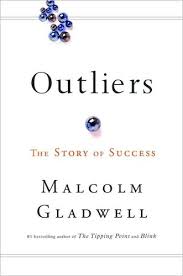
Outliers: The Story of Success, by Malcolm Gladwell. (Little, Brown and Co., 2008)
Malcolm Gladwell does it again. As in his earlier books, The Tipping Point and Blink, he rounds up research from a variety of sources to support an intriguing idea. In this case, he questions why it is that some individuals rocket to success, while others, with seemingly equal potential, achieve much less. He posits that an "outlier," someone who achieves at a level outside statistical norms, really owes his success to a variety of factors that are not in his control.
As he marches through a series of case studies and summaries of research, the author delivers the argument that the very successful benefit from opportunities as diverse as birth dates, parenting styles, and cultural legacies. In all cases, though, he points to the value of cumulative hours of work undertaken by his high achievers, whether he is talking about Bill Gates or the Beatles. While we assume that great success is bestowed upon those with outsize intelligence or ambition, Gladwell marshalls research and examines biographies to show how his selected "outliers" actually developed.
As the book progresses, the reader looks for, but does not find, any evidence or argument against Gladwell's chosen thesis. Nonetheless, the research he presents is intriguing and endlessly debatable. Outliers would make a great selection for a book discussion group.
Gladwell is an excellent writer, and he pulls the reader into his argument using fascinating and readable examples. While the ending is a bit indulgent, this short book, overall, is well worth your time.
Subscribe to:
Posts (Atom)


 Posts
Posts

