Currently Reading

Reading: My Two Polish Grandfathers, by Witold Rybczynski.
Listening to: Blasphemy, by Douglas Preston.
Showing posts with label book review. Show all posts

Sunday, May 1, 2011

Mary Reviews: Delirium


Delirium, by Lauren Oliver. (Harper Collins e-books, c2011)

The United States government has found the cure for Amor Deliria Nervosa, a highly contagious disease that endangers personal and political peace. At the age of 18, all citizens are cured of this illness, better known as Love. Lena is counting down the days until her procedure, knowing that it will provide her with a happy, predictable, pain-free life. Then she meets Alex, a young man who introduces her to the highs and lows, the joy and despair of love.

Author Lauren Oliver creates an America of walled cities and total government control. Lena's newfound passion grants her a clear vision of what her elders have given up for their happy, uneventful lives. Her world is thrown into chaos, as she learns to value that passion, rather than the orderly, sedate existence she has been trained to expect.

This novel hits on themes of love, resistance to authority, and dystopian society. It ends with many unanswered questions that will inspire readers to anxiously await the next book in the series.

For young adults, but will be of interest to book discussion groups.

Thursday, February 4, 2010

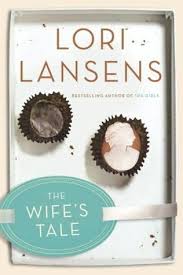
Review: The Wife's Tale


The Wife's Tale, by Lori Lansens. (New York: Little, Brown and Company, 2009)

Obeast.

At the age of nine, Mary Brody overhears the doctor telling her mother that the child is seriously overweight. As she hears it, it is the "obeast" living inside her that causes her to eat and eat and eat. In her new novel, author Lori Lansens again examines the life of someone whose physical self makes her different, outside the norm.

Mary loses weight in high school and attracts tall, smart, hunky basketball player Gooch. When a pregnancy scare drives them to marry right out of high school, Mary begins to build a wall of food and fat around her insecurities. Gooch, who gave up his college scholarship when Mary became pregnant, is devoted to his ever-growing wife, urging her to explore the world outside their small Canadian town with him. Mary's clandestine eating binges and lack of "clothes that fit" lead to her increasing isolation. Finally, on the day of their 25th anniversary, Gooch disappears.

This event proves to be cataclysmic for Mary, who sets out on a journey to find her missing husband and to make up for her unwillingness to participate in the life he dreamed of. An innocent of sorts, she sets out for California and meets agents of help and change everywhere she looks. As she searches for Gooch, she also learns to live in the world without him. She begins to lose weight, along with a lot of other emotional baggage.

In some ways, this novel is a "makeover." The reader almost hopes that Mary will find happiness and accept herself without having to lose her weight, but the author handles the transformation gracefully, without applying overly positive or negative labels to Mary's varying body sizes.

The author is an appealing storyteller. While her storyline sometimes seems a little too pat, she nonetheless brings Mary to life and creates a compelling narrative.

This book is a natural for book clubs. Highly recommended.

Saturday, November 7, 2009

Review: Under the Persimmon Tree

Staples, Suzanne Fisher. Under the Persimmon Tree. (New York: Farrar, Straus and Giroux, 2005.)

This story engaged me from page one. The author combines a compelling story with informative and illustrative scenes of war and life in the mountains of Afghanistan, in refugee camps, and in Peshawar, Pakistan.

We learn about the unpredictability of life under Taliban rule and of the random horror of American bombing raids from the story of Najmah. The young Afghani girl loses her family and finds herself reluctantly fleeing her home and her country to seek safety in Pakistan.

At the same time, we hear the story of Nusrat, an American woman (nee Elaine) who fell in love with an Afghani doctor in New York. She converts to Islam, marries him, and returns with him to Pakistan, where his family has sought refuge from the war. When he leaves to staff a medical clinic in embattled Afghanistan, Nusrat stays behind, where she teaches refugee children and grows ever closer to her husband's family.

Eventually, these two stories connect, but not before the author takes the time to explore the different ways that the two protagonists react to family, loss, and love. Najmah is defined by her strong connection to her family and to her mountain home. She is determined to return there, despite incredible dangers, no matter what. Nusrat, on the other hand, leaves behind the family she knows to create a life with her husband and his family in a new land.

Under the Persimmon Tree was named an ALA Notable Children's Book for Older Readers. Highly recommended.

Friday, October 30, 2009

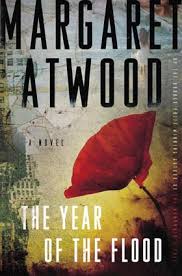
Review: The Year of the Flood

Atwood, Margaret. The Year of the Flood. (New York: Nan A. Talese, 2009)

In this richly imagined world, corporations are in charge, not governments. And the corporations with the most power are those that cater to human desires for beauty and for control over the environment. Genetically engineered products are everywhere, tempting people to look younger, sexier, prettier. New animals, like the Mo'Hair sheep, are designed to provide beauty products (in this case, transplantable hair). People live in corporate compounds, where intelligence is for sale, individuals and families are under company surveillance, and freedom is exchanged for a shaky sense of security and well-being.

Outside the compounds, in the pleeblands, chaos reigns. Violence, poverty, and greed fill every street. The air is bad, buildings are falling down, and gangs roam the streets.

Living in this not-so-distant dystopian future is a cult known as The Gardeners. Led by a charismatic, semi-Christian character known as Adam One, The Gardeners live simply and worship such holy people as Saint Euell Gibbons, Saint E. O. Wilson, and St. Dian Fossey. Vegetarians, they eat "nothing with a face". They honor disappearing species, and they prepare for the "Waterless Flood," a disaster that they anticipate will wipe out most of life on earth.

The storyline centers on two characters. Toby, saved by The Gardeners from a brutal and abusive boss, becomes a practitioner, but reluctant believer. Ren, a teenager when we meet her, moves in and out of The Gardeners' world at the whim of her mother. When her mother leaves The Gardeners and returns to her husband in the HelthWyzer Corporation, we get to experience life inside the corporate compound. Neither Toby nor Ren completely believe in The Gardeners' way of life, but both rely on what they learned, when they find themselves survivors of a deadly plague.

Atwood's creation is visionary, frightening, cautionary, and darkly amusing. Those who have read Oryx and Crake will recognize some characters, as this story takes place at the same time, although from a wholly different perspective.

Highly recommended.

Friday, May 1, 2009

Review: Handle with Care


Handle with Care, by Jodi Picoult. (New York: Atria Books, 2009)

Willow O'Keefe is a smart, funny five-year-old with osteogenesis imperfecta (OI), or "brittle bone" disease. Her first fractures occur in utero, and the next breaks take place just after her birth. Handle with Care examines the extraordinary pressures on the family, especially on the mother, of a child who needs so much care.

Willow's mother, Charlotte, once a successful pastry chef, now cares for her young daughter full time. She becomes an effective, even aggressive, medical advocate for Willow during her frequent hospitalizations for broken bones. Her focus on Willow creates a distance between Charlotte and her policeman husband, Sean, and makes her adolescent daughter, Amelia, feel invisible.

Charlotte sets in motion a "wrongful birth" lawsuit, alleging that her obstetrician, who is also her best friend, did not give her the critical information she needed that would have given her the option to terminate her pregnancy. Charlotte believes that a substantial legal settlement is the only way for Willow to have a comfortable life, especially after her parents are gone.

Because of the lawsuit and the pressure it creates, Charlotte finds herself adrift and distant from all the people she loves -- her husband, her best friend, and her older daughter. Even her lawyer finds Charlotte's lawsuit distasteful. Nonetheless, Charlotte pushes on, firm in her belief that her choice is the only right one.

This book is brimful of issues. In addition to a child with OI and a wrongful birth lawsuit, Picoult throws in divorce, bulimia, cutting, shoplifting, Catholic pro-life beliefs, medical malpractice, and an adult adoptee searching for her birth mother. While there are enough themes going on here to supply several books, they don't really get in the way of getting this story told. Narration is accomplished through a variety of characters, all of whom address themselves to Willow.

This is the first Jodi Picoult novel I've read, although she's been recommended to me by my librarian friends for years. The book has strong characters, a compelling storyline, and plenty of surprises. I'll have to begin looking at Picoult's "also by" list for more titles to read.

Thursday, April 9, 2009

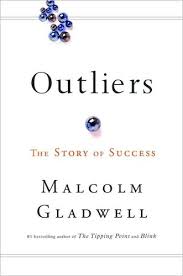
Review: Outliers


Outliers: The Story of Success, by Malcolm Gladwell. (Little, Brown and Co., 2008)

Malcolm Gladwell does it again. As in his earlier books, The Tipping Point and Blink, he rounds up research from a variety of sources to support an intriguing idea. In this case, he questions why it is that some individuals rocket to success, while others, with seemingly equal potential, achieve much less. He posits that an "outlier," someone who achieves at a level outside statistical norms, really owes his success to a variety of factors that are not in his control.

As he marches through a series of case studies and summaries of research, the author delivers the argument that the very successful benefit from opportunities as diverse as birth dates, parenting styles, and cultural legacies. In all cases, though, he points to the value of cumulative hours of work undertaken by his high achievers, whether he is talking about Bill Gates or the Beatles. While we assume that great success is bestowed upon those with outsize intelligence or ambition, Gladwell marshalls research and examines biographies to show how his selected "outliers" actually developed.

As the book progresses, the reader looks for, but does not find, any evidence or argument against Gladwell's chosen thesis. Nonetheless, the research he presents is intriguing and endlessly debatable. Outliers would make a great selection for a book discussion group.

Gladwell is an excellent writer, and he pulls the reader into his argument using fascinating and readable examples. While the ending is a bit indulgent, this short book, overall, is well worth your time.

Sunday, January 18, 2009

Review: The Good Thief


The Good Thief, by Hannah Tinti. (The Dial Press, 2008.)

A one-handed infant is dropped at the gates of a Catholic monastery in New England sometime in the 19th century. Ren, named for the three letters sewn into the garment he wears, spends his childhood dreaming of being reunited with his mother and father.


As a young teenager, he is released into the custody of a man who claims to be his long-lost brother. Benjamin is actually a con artist and snake oil salesman, who makes Ren his accomplice in life on the wrong side of the law. Ren, a naïf filled with innocence, faith, and prayer, is nonetheless accomplished at the art of light-handed theft and turns out to be of great value to his new benefactor.


Ren’s adventures on the underside of life are reminiscent of the picaresque novels popular in the 18th century. Many reviewers have compared the author’s work to that of Robert Louis Stevenson. The reader is treated to an ironic depiction of the many shapes that families can take. Beware: As this captivating story progresses, there is no shortage of violence, tragedy, or terror.


Recommended for adults and young adults, especially those who enjoy Dickens-style characters and adventures.

Friday, December 19, 2008

Review: Life After Genius


Life After Genius, by M. Ann Jacoby. (New York: Grand Central Publishing, 2008)

Mead Fegley is the kind of kid that other kids love to pick on. He's smaller than average, he lacks social graces, and he's a math genius. He heads off to college after graduating from high school at age 15, hoping that his life will change and that his fellow students will appreciate him for his intellectual talents. He continues to excel academically, but his youth and his awkward ways prevent him from developing real friendships.

This book works very well as a coming-of-age story. Mead is self-centered and introspective, in the way that most children and adolescents are, but his outsize intelligence exaggerates these qualities. He is bright and engaging and even likable in his internal musings, but becomes sarcastic and supercilious when he tries to relate to others. The author capably illustrates the difficulties faced by a child who stands out in a small town. Townspeople invariably categorize him as "the young Fegley genius."

Where the book falters is in Jacoby's treatment of Mead's life as a college student. He works hard and is singled out for academic honors, but he appears to suffer from some delusional episodes. In his relationship with Herman, his academic rival and social superior, the reader is hard pressed to distinguish between what is real and what is not.

I'm a sucker for a great title, but Life After Genius promises more than it delivers. The story is told mostly in flashbacks, after Mead inexplicably leaves college for his hometown a few days before graduation, but the reader never really learns whether or how Mead will conduct his life outside his carefully constructed world of mathematical genius.

While the book is interesting and, in some parts, quite compelling, overall, it suffers from inconsistencies and, perhaps, too ambitious a storyline. Jacoby could have saved some of the plot twists for other books and made this one simpler and more enjoyable. Nonetheless, I recommend it to readers of general fiction.

Tuesday, December 9, 2008

Brief Review: The Story of Edgar Sawtelle


The Story of Edgar Sawtelle, by David Wroblewski. (New York: Ecco, 2008)

This Oprah selection is showing up on all the Best of 2008 lists. Both Stephen King and Richard Russo, two very different kinds of writers, wrote recommendations for the back cover of the book, and that's what made me decide to read it. I'm a little more than halfway through, so this may be a premature post, but I'm finding it to be an engaging story with remarkable characters.

Edgar is born without the ability to speak, although he is normal in every other way. A precocious child, he reads early and learns sign language to communicate with his parents. His parents, by the way, are the second generation breeders of an unusual kind of dog, one whose pedigree is based on character and personality, rather than thoroughbred lines.

Oprah's recommendation will be enough to encourage book clubs everywhere to take on this novel. Read this even if you're the kind of reader who stays away from the popular stuff. There's a lot to appreciate -- imagery, character development, story line -- in The Story of Edgar Sawtelle.

Tuesday, October 14, 2008

Review: Home


Home, by Marilynne Robinson. (Farrar, Straus and Giroux, 2008. ISBN: 0374299102)


Too much is left unsaid in this beautifully written book. Two of Reverend Boughton's eight adult children -- Jack, the black sheep, and Glory, the youngest -- have returned to the family homestead, due to difficult circumstances in their lives. They are all very careful of one another's privacy, and they tiptoe around discussing the events that have brought them home to Gilead.

Ultimately, caution and taciturnity become frustrating, both for the characters and for the reader. The stingy hints that Jack and Glory share about their lives initially provide some dramatic tension, but the habits of concealment become almost annoying in the end. The book closes with some elucidation of the reasons for Jack's angst, but we never really learn much about the details of Glory's troubles.

Nonetheless, it is a pleasure to read the words that Pulitzer Prize winner Robinson puts together to deliver this somewhat unsatisfying story. Her sentences are simple, but they are crammed with thought and analytical insights. She is not just a great writer; she is also a great thinker.

If you enjoyed Gilead, the author's previous work, you will recognize the Boughton family. In this story, it is Reverend Ames and his family who are the secondary characters. Enjoy this book for its writing, but don't expect too much from the story.

Sunday, October 5, 2008

Review: A Voyage Long and Strange (Audio)


A Voyage Long and Strange, by Tony Horwitz. (Digital Audiobook read by John H. Mayer)

Horwitz challenges traditional American teaching on the discovery of America and America’s first European settlements. Using a combination of primary research (e. g., the writings of Columbus) and interviews with modern-day descendants of European settlers and Native Americans, he pokes holes in what we think we know about such touchstones as Plymouth Rock and the first Thanksgiving.

Realizing that he, like most Americans, had little understanding of what happened between Columbus’s “discovery” of America in 1492 and the Pilgrims’ arrival at Plymouth in 1620, he sets out to fill in the blanks. Along the way, he travels from Newfoundland and the early Viking settlements of A.D. 1000; to the earliest (1565) permanent European settlement in the continental U.S. (St. Augustine, Florida); and he follows the trails of the Spanish conquistadors through the American Southwest. He spends a good bit of time focusing on John Smith and the Jamestown settlement, which predates Plymouth and the Pilgrims.

While Horwitz’s writing is wry and filled with amusing stories about the odd characters he meets in his travels, his history of early U.S. settlement is filled with violence, devastating illnesses, disasters, and greed. Horwitz concludes that the inaccurate and whitewashed version of American settlement that we learn about in school is more myth than history, but that we can expect the myths to prevail.

I listened to this title using the downloadable audio service powered by OverDrive, available online at my library, Lackawanna County Library System.

Sunday, September 28, 2008

Review: When We Were Romans

When We Were Romans, by Matthew Kneale.
(Nan A. Talese, Doubleday, 2008. ISBN: 0385526253)

I love the title! Nine-year-old narrator Lawrence, his single mother, and his three-year-old sister Jemima become Romans to get away from their stalker dad who lives in Scotland, but who has been harassing them in their London home.

Lawrence has a very tight bond with his mother, and he works hard to keep things on an even keel. He constantly monitors her moods and tries to help her remain positive and happy. She, in turn, confides in him about the scary things his father is capable of, and the two of them grow even closer as they endeavor to keep their secrets from young Jemima.

As the story progresses, it becomes apparent that the family problem may be mom’s, not dad’s, but Lawrence is loyal to the mother he loves, and he believes her whenever she announces that they are in danger from his father.

Lawrence is a bright kid, interested in astronomy and history. He reads a series of “Horrid Histories” that feature “Calamitous Caesars” and “Petrifying Popes.” I can’t confirm that such a series actually exists, but I hope it does! Nine-year-olds everywhere would love it. (Update! A series called "Horrible Histories" does exist. It's published in England. Check out the series website.)

The author does an amazing job of maintaining the perspective of a young boy. The text is filled with misspellings that a child of that age might employ, working more from words he has heard than from words he has read. For example, his mother always refers to her children as “les enfants,” which, in Lawrence’s transcription, becomes “lesonfons.

When the family returns to Scotland to deal once and for all with Lawrence’s father, the reader becomes aware of just what a child is capable of doing to protect his mother and sister. The book takes us on a journey, not just to Rome, but to the edge of sanity. When We Were Romans is filled with issues, relationships, and personalities that will provide book clubs with plenty to discuss.

Sunday, August 17, 2008

Audio Book Briefs

I’m a huge fan of downloadable audio, available through my public library. I download titles to my MP3 player and listen in my car or when I walk.

Although I prefer reading to listening, audio books give me an opportunity to listen to things I might not otherwise read – sometimes light and popular titles, sometimes nonfiction I might not take the time to read, and sometimes classics that I might never get around to rereading. My regular commute keeps me on the road quite a bit, so I work my way through a couple of audio books each month.

Here are some books I’ve listened to this summer:

Olive Kitteridge, by Elizabeth Strout

Olive, a retired high school math teacher, is not a very sympathetic character. She is often rough in her interactions with others, and she appears especially unpleasant in contrast to her husband, loved by everyone in their Maine town. Particularly heartbreaking is her inability to communicate her powerful love for her grown son, as they grow more and more estranged. We learn about Olive through the eyes of her husband and son, her neighbors, and her students, as the author tells stories about their lives. Read by Sandra Burr.

T Is for Trespass, by Sue Grafton

The latest in the alphabetical series about Private Investigator Kinsey Millhone, this book takes on identity theft as its central premise. Even though the plot is rather predictable, Grafton’s main character is always fun to spend some time with. Judy Kaye is the narrator.

Rage, by Jonathan Kellerman

Kellerman’s books are definitely not for the faint of heart. The crimes are always gruesome, and the dialogue between Dr. Alex Delaware and Lt. Milo Sturges can be pretty graphic. John Rubinstein does an excellent job of narration, bringing the two main characters to life.


Middlemarch, by George Eliot

An extraordinary book, beautifully written, funny, and filled with insights about people and relationships, is brought to auditory life by the fine narrator Kate Reading. It takes more than 31 hours to listen to this classic, but it is time enjoyably spent.

Saturday, August 2, 2008


Review: The Wednesday Sisters

The Wednesday Sisters, by Meg Waite Clayton.
(Ballantine Books, 2008. ISBN:
0345502825)

A group of young mothers meet in a park in Palo Alto in 1968. Over the next few years, they share personal triumphs and tragedies, all while working together to develop their writing skills. Their catalog of woes ranges from infidelity and infertility to cancer.

The characters observe and sometimes participate in the many events that changed the country during those disruptive years. What makes this story different from so many others that focus on that time period is the perspective from which it is told. The young women are wives and mothers, engaged in the traditional roles of supporting their upwardly-mobile husbands and raising their children. Most novels set in the late 1960’s feature characters that are more directly and actively engaged in the political and social upheaval of the time.

A light read with a rather predictable story line, The Wednesday Sisters is nonetheless notable for its reflections on the many changes in the roles of women in society over the last few decades. Younger readers may be surprised to learn about the demonstrations outside the Miss America Pageant and to read about women athletes who were barred from competing in the Boston Marathon.

Women's book discussion books may want to consider this title.


Friday, July 18, 2008

Review: Swim to Me

Swim to Me, by Betsy Carter.
(Algonquin Books of Chapel Hill, 2007, ISBN: 1565124928)

Once upon a time, before Disney World and Universal Studios became defining destinations, visitors to Florida found unusual attractions down every road. One of them was (and still is) Weeki Wachee Springs, featuring a "city of live mermaids." The author's story is an invention that fits snugly into the real history of the site and its performers.

Delores is a girl from the Bronx who loves to swim and who dreams of becoming a Weeki Wachee mermaid. She finds more success than she ever imagined, becoming a weather girl for a local TV station (forecasting from a bathtub in her mermaid tail) and, ultimately, the star of a combination circus/aquatic show. The fairy tale quality of the book is balanced by the back story of her unhappy family life and the breakup of her parents' marriage.

The novel takes place around 1970, and it is full of product and song placements that will make readers of a certain age smile with recollection.

Disney World has just opened as the story comes to its climax, and Walker chooses to focus on the success that Weeki Wachee Springs achieves in putting on a fabulous new show that produces jealousy in Walt Disney himself. Left unspoken is what every reader knows: that Disney's creation will come to dwarf attractions like the one in the book.

An excellent choice for book clubs.