Currently Reading

Reading: My Two Polish Grandfathers, by Witold Rybczynski.
Listening to: Blasphemy, by Douglas Preston.
Showing posts with label book clubs. Show all posts

Thursday, February 4, 2010

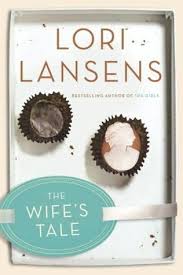
Review: The Wife's Tale


The Wife's Tale, by Lori Lansens. (New York: Little, Brown and Company, 2009)

Obeast.

At the age of nine, Mary Brody overhears the doctor telling her mother that the child is seriously overweight. As she hears it, it is the "obeast" living inside her that causes her to eat and eat and eat. In her new novel, author Lori Lansens again examines the life of someone whose physical self makes her different, outside the norm.

Mary loses weight in high school and attracts tall, smart, hunky basketball player Gooch. When a pregnancy scare drives them to marry right out of high school, Mary begins to build a wall of food and fat around her insecurities. Gooch, who gave up his college scholarship when Mary became pregnant, is devoted to his ever-growing wife, urging her to explore the world outside their small Canadian town with him. Mary's clandestine eating binges and lack of "clothes that fit" lead to her increasing isolation. Finally, on the day of their 25th anniversary, Gooch disappears.

This event proves to be cataclysmic for Mary, who sets out on a journey to find her missing husband and to make up for her unwillingness to participate in the life he dreamed of. An innocent of sorts, she sets out for California and meets agents of help and change everywhere she looks. As she searches for Gooch, she also learns to live in the world without him. She begins to lose weight, along with a lot of other emotional baggage.

In some ways, this novel is a "makeover." The reader almost hopes that Mary will find happiness and accept herself without having to lose her weight, but the author handles the transformation gracefully, without applying overly positive or negative labels to Mary's varying body sizes.

The author is an appealing storyteller. While her storyline sometimes seems a little too pat, she nonetheless brings Mary to life and creates a compelling narrative.

This book is a natural for book clubs. Highly recommended.

Tuesday, December 9, 2008

Brief Review: The Story of Edgar Sawtelle


The Story of Edgar Sawtelle, by David Wroblewski. (New York: Ecco, 2008)

This Oprah selection is showing up on all the Best of 2008 lists. Both Stephen King and Richard Russo, two very different kinds of writers, wrote recommendations for the back cover of the book, and that's what made me decide to read it. I'm a little more than halfway through, so this may be a premature post, but I'm finding it to be an engaging story with remarkable characters.

Edgar is born without the ability to speak, although he is normal in every other way. A precocious child, he reads early and learns sign language to communicate with his parents. His parents, by the way, are the second generation breeders of an unusual kind of dog, one whose pedigree is based on character and personality, rather than thoroughbred lines.

Oprah's recommendation will be enough to encourage book clubs everywhere to take on this novel. Read this even if you're the kind of reader who stays away from the popular stuff. There's a lot to appreciate -- imagery, character development, story line -- in The Story of Edgar Sawtelle.

Sunday, September 28, 2008

Review: When We Were Romans

When We Were Romans, by Matthew Kneale.
(Nan A. Talese, Doubleday, 2008. ISBN: 0385526253)

I love the title! Nine-year-old narrator Lawrence, his single mother, and his three-year-old sister Jemima become Romans to get away from their stalker dad who lives in Scotland, but who has been harassing them in their London home.

Lawrence has a very tight bond with his mother, and he works hard to keep things on an even keel. He constantly monitors her moods and tries to help her remain positive and happy. She, in turn, confides in him about the scary things his father is capable of, and the two of them grow even closer as they endeavor to keep their secrets from young Jemima.

As the story progresses, it becomes apparent that the family problem may be mom’s, not dad’s, but Lawrence is loyal to the mother he loves, and he believes her whenever she announces that they are in danger from his father.

Lawrence is a bright kid, interested in astronomy and history. He reads a series of “Horrid Histories” that feature “Calamitous Caesars” and “Petrifying Popes.” I can’t confirm that such a series actually exists, but I hope it does! Nine-year-olds everywhere would love it. (Update! A series called "Horrible Histories" does exist. It's published in England. Check out the series website.)

The author does an amazing job of maintaining the perspective of a young boy. The text is filled with misspellings that a child of that age might employ, working more from words he has heard than from words he has read. For example, his mother always refers to her children as “les enfants,” which, in Lawrence’s transcription, becomes “lesonfons.

When the family returns to Scotland to deal once and for all with Lawrence’s father, the reader becomes aware of just what a child is capable of doing to protect his mother and sister. The book takes us on a journey, not just to Rome, but to the edge of sanity. When We Were Romans is filled with issues, relationships, and personalities that will provide book clubs with plenty to discuss.

Saturday, August 2, 2008


Review: The Wednesday Sisters

The Wednesday Sisters, by Meg Waite Clayton.
(Ballantine Books, 2008. ISBN:
0345502825)

A group of young mothers meet in a park in Palo Alto in 1968. Over the next few years, they share personal triumphs and tragedies, all while working together to develop their writing skills. Their catalog of woes ranges from infidelity and infertility to cancer.

The characters observe and sometimes participate in the many events that changed the country during those disruptive years. What makes this story different from so many others that focus on that time period is the perspective from which it is told. The young women are wives and mothers, engaged in the traditional roles of supporting their upwardly-mobile husbands and raising their children. Most novels set in the late 1960’s feature characters that are more directly and actively engaged in the political and social upheaval of the time.

A light read with a rather predictable story line, The Wednesday Sisters is nonetheless notable for its reflections on the many changes in the roles of women in society over the last few decades. Younger readers may be surprised to learn about the demonstrations outside the Miss America Pageant and to read about women athletes who were barred from competing in the Boston Marathon.

Women's book discussion books may want to consider this title.


Friday, July 18, 2008

Review: Swim to Me

Swim to Me, by Betsy Carter.
(Algonquin Books of Chapel Hill, 2007, ISBN: 1565124928)

Once upon a time, before Disney World and Universal Studios became defining destinations, visitors to Florida found unusual attractions down every road. One of them was (and still is) Weeki Wachee Springs, featuring a "city of live mermaids." The author's story is an invention that fits snugly into the real history of the site and its performers.

Delores is a girl from the Bronx who loves to swim and who dreams of becoming a Weeki Wachee mermaid. She finds more success than she ever imagined, becoming a weather girl for a local TV station (forecasting from a bathtub in her mermaid tail) and, ultimately, the star of a combination circus/aquatic show. The fairy tale quality of the book is balanced by the back story of her unhappy family life and the breakup of her parents' marriage.

The novel takes place around 1970, and it is full of product and song placements that will make readers of a certain age smile with recollection.

Disney World has just opened as the story comes to its climax, and Walker chooses to focus on the success that Weeki Wachee Springs achieves in putting on a fabulous new show that produces jealousy in Walt Disney himself. Left unspoken is what every reader knows: that Disney's creation will come to dwarf attractions like the one in the book.

An excellent choice for book clubs.